


5
In Case You Missed It… Articles Roundup Week of 8/5/11
In this week’s roundup… Venezuela’s National Assembly passes a controversial Sports Law which squeezes the private sector by imposing an additional tax on their gross revenues; Chávez prepares for a new round of chemotherapy; Canadian mining company Gold Reserve Inc. raises its claim against the Chávez government; inflations rises to 25%; up to 40% of Venezuela’s inmates could be freed; and the ties between Iran and Venezuela continue to grow.
Soccer-Venezuela courts controversy with sports law, Reuters
Venezuela is on collision course with world soccer governing body FIFA and the International Olympic Commission after its parliament approved a controversial sports law that threatens the autonomy of its sports federations.
Venezuela’s Hugo Chavez seeks aid from indigenous deities to help him survive cancer, The Washington Post via AP
President Hugo Chavez told a gathering of soldiers Thursday that he’s seeking divine support from the indigenous deities and spirits of Venezuela’s central plains to help him survive cancer.
Gold Reserves Inc raises claim against Venezuela, International Business Times
Canadian mining company Gold Reserve Inc said on Monday it has raised the amount it is claiming from Venezuela for seizing its two gold projects to $2.1 billion from $1.9 billion.
Venezuela’s annual inflation tops 25 percent, Bloomberg Businessweek via AP
Venezuelan officials say the country’s annual inflation rate has risen to 25.1 percent.
The Central Bank and the National Statistics Institute record a 2.7 percent rise in prices during July.
Report: Venezuela could release up to 40% of its prisoners, CNN
Venezuela’s new prisons minister believes that 40% of the country’s inmates do not belong behind bars, the El Nacional newspaper reported. The newspaper published an interview with Iris Varela on Sunday, in which she outlined her vision to fix the country’s overcrowded prison system
Venezuela Signs $1 Billion Deal with Iran to Build Houses, The Wall Street Journal
Venezuela signed a $1 billion deal with Iran to build 10,000 houses in the South American country, according to a statement on the Venezuelan Foreign Ministry’s website.
Source: Gaddafi wants Chávez to help sell oil, The Miami Herald
A Libyan delegation visited Venezuela over the weekend to seek help in selling Libyan oil on the international market, according to intelligence sources.
14
After Chávez, the Deluge

José R. Cárdenas served in several foreign policy positions during the George W. Bush administration (2004-2009), including on the National Security Council staff. He is a consultant with Vision Americas in Washington, DC.
Hugo Chávez has finally divulged he is being treated for cancer, but — in typical secretive fashion — offered no significant details as to the prescribed treatment, or just what impact his medical condition will have on his ability to govern Venezuela. He has hinted at potentially needing chemotherapy, a treatment which will necessarily debilitate his ability to govern, and perhaps campaign for Venezuela’s 2012 presidential election.
Due to Chávez’s authoritarian nature, this translates into a power vacuum that has to be filled — who does so will determine Venezuela’s foreseeable future. The situation is compounded by the fact that Chávez has left his would-be successor a veritable time-bomb of growing domestic woes.
The fact that the Venezuelan strongman has presided over a faction-ridden regime is hardly surprising, given that his government is bereft of institutions and power is wielded arbitrarily. Those competing for power within Chavismo are not Boy Scouts but hardliners that can be counted on to act more like Mafia dons at war than accountable public officials managing a democratic succession. (Remember, there are billions of dollars up for grabs here.)
The faction best positioned to govern in Chávez’s stead appears to be made up of those trusted by the Castro regime, which itself has an interest in keeping its economic lifeline alive and well. They include Vice President Elías Jaua and Foreign Minister Nicolás Maduro, both colorless but loyal apparatchiks to Chávez and Castro. Also in this group is Chávez’s older brother Adán, a former Venezuelan ambassador to Cuba with close ties to the Castro regime. Adán is charisma-challenged, but has the right bloodlines.
Backing this faction will be a rogues’ gallery of international stakeholders that have profited immensely from Chávez’s largesse over the years. They will advocate for maintaining the status quo — with or without Chávez — through the 2012 elections. These include Russia, China, Iran, and, of course, Cuba, not to mention the ALBA countries that benefit from Venezuela’s petrodollars.
Another faction revolves around former Chavista officials who, for one reason or other, were removed from office by Chávez and would certainly be interested in regaining a measure of power with all its perks and privileges. They include National Assemblyman Diosdado Cabello (former Vice President), José Vicente Rangel (former Vice President), and Jesse Chacón (former Minister of the Presidency). These individuals, however, are not trusted by the Cubans because of their independent thinking. How the status quo faction deals with these individuals will define a post-Chávez Venezuela. Will they once again be allowed a cut of the action, or will they continue to be marginalized? If it’s the latter, hold on to your seats.
While the Cabello faction maintains strong ties to the military, the wild cards in this situation could be Minister of Defense General Henry Rangel Silva and Chief of Military Intelligence Hugo Carvajal. Both are Chavistas to the core but need to maintain low political profiles due to having been sanctioned by the United States for facilitating narcotics trafficking through Venezuela. That said, make no mistake about it, they both wield enough behind-the-scenes power to make or break Chávez’s successor.
What’s important to remember amidst all this cut-throat palace intrigue playing out over the next weeks and months in Venezuela is the increasing ungovernability of the country. In short, Chávez has left a mess. From the region’s highest inflation rate and electricity rationing to rising street crime and unsustainable spending programs, the current state of affairs in Venezuela is more than any consolidated government could handle, let alone one trying to piece itself together in the wake of such a polarizing leader as Hugo Chávez.
It is hard to tell what direction the Chavista rollercoaster will take next, but whatever it is, only one thing is certain – it is going to be a bumpy ride.
29
Trafficking in Persons 2011 Report
The US State Department has included Venezuela on a list of nations that could face sanctions along with Cuba, Costa Rica, Panamá and the Dominican Republic for their lack of action in combating human trafficking. The 11th edition of the Trafficking in Persons Report did not see much progress in Venezuela’s efforts to combat human trafficking, for which it can face a number of sanctions ranging from the suspension of non humanitarian and non commercial aid to the US opposing IMF or World Bank financing.
According to the report presented by Secretary of State Hillary Clinton, “Venezuela is a source, transit, and destination country for men, women, and children subjected to sex trafficking and forced labor. Venezuelan women and girls are found in conditions of sex trafficking within the country, lured from poor interior regions to urban and tourist centers, such as Caracas, Maracaibo, and Margarita Island”.
The report also stated a number of reforms that must happen in order for Venezuela to get on the right track when it comes to combating human trafficking. These reforms include:
- Modifying its current laws in order to prohibit and adequately reprimand any type of human trafficking
- Intensifying its efforts to investigate and prosecute cases of forced prostitution and slave labor
- Prosecuting and jailing the traffickers
- Providing better specialized assistance to the victims
- Identifying the victims among vulnerable groups
- Improving the current databases in regards to these types of felonies
The listing of Venezuela in the report is likely to further deteriorate the already fragile diplomatic relations between both countries. Both countries lack the representation of ambassadors in their territories. Furthermore, the US imposed economic sanctions on the state owned oil company, PDVA, for their dealings with Iran.
9
Time to call Chávez’s oil bluff?

WNVZ is pleased to introduce blogger Dane Vallejo as a guest writer to our website. An Associate Fellow at The Henry Jackson Society, Dane blogs regularly on Latin American issues. ¡Bienvenido Dane!
Washington has for some time been constricted in taking a tough stance against Venezuela’s Chávez by the threat it perceives to its security of oil supply. But what if that threat was little more than a bluff?
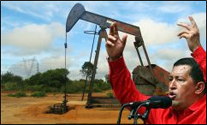 For many interested parties, upon hearing of the fresh consignment of US sanctions imposed on seven foreign firms (including Petróleos de Venezuela – PdVSA) for their supply of refined petroleum products to Iran, immediate thoughts would have gravitated toward two questions that have been well trodden since: will this halt Iran’s nuclear programme? And, will the sanctions hit PdVSA hard?
The short answer to both questions is a round-about no.
The slightly longer version reads that since Tehran has proved itself adept at circumventing weakly imposed sanctions up until now, it seems unlikely that slapping the wrists of these seven firms will buck that trend. And as for PdVSA, oil exports to the US will continue unaffected as will the activities of its subsidiaries, i.e. Citgo, meaning that business will likely continue as usual, save the newly enforced bans on US government contracts, import-export financing and US export licences — none of which have particularly interested the Venezuelan oil giant in the recent past anyway.
But this exhibition of relative (though still fairly puny) diplomatic muscle from Washington also kicks up a third and less widely touted question: is now the time to start calling Hugo Chávez’s oil bluff?
In recent years, the firebrand has threatened to diversify Venezuela’s oil away from the US market, principally toward China, in a bid to secure new security of supply; making Washington think twice before dishing out demands and creating a bit of wiggle room in the process. But upon closer inspection, Chávez’s aggressive oil diplomacy is perhaps not as well grounded as he might have us believe.
If truth be told, it is actually the US that is better placed to play hardball. Indeed, one of the most curious aspects of the Washington-Caracas standoff is that while both states undoubtedly depend on the other’s custom, it is in fact Caracas whose dependency is more acute. In 2010, 8.3% of US oil imports arrived from Venezuela — no small fry — but in marked contrast, this 8.3% translated to fully 43% of Venezuelan oil exports. It should be clear who stands to take the larger hit.
As for the Chinese alternative, for Beijing to take the Venezuelan market seriously, it would require an astronomical investment in order to bridge the logistical gap, not only in terms of transportation, but also in acquiring the capability to process Venezuela’s characteristically thick crude. And the latter point is a particularly important one since the fungible nature of oil as a commodity is called into question when consumers with the ability to process one’s commodity are in short supply. Couple that economic expense with the inevitable political one attached to any move into the US’ ‘backyard’, long since considered its strategic preserve, and a long term strategic partnership between Caracas and Beijing appears unlikely while the latter has better options in Central Asia.
Short of revenue-sapping, politically-charged, regional energy schemes such as Petrocaribe then, Venezuela really has little room for meaningful diversification away from the US.
Taking stock of this reality is important for US policy makers as it essentially means that a significant departure from the trade status quo between Caracas and Washington would be in the interests of neither party and is therefore unlikely as such. Quite frankly, it pours a bucket of cold water on Chávez’s fiery oil-threat since, with paltry means of pulling the plug on US supply the threat becomes little more than a bluff.
With that room for manoeuvre established, what of Washington’s scope for pressing Chávez harder on the ideological line?
Let’s be clear, slapping a reducer on Chávez will be best achieved democratically. The failed coup of 2002, hastily endorsed by the Bush administration, showed in no uncertain terms that attempts at regime change only serve to fan the flames that have kept Chávez’s popular appeal burning. Hence, the focus in Washington has correctly shifted to sanctions — the uncertain, yet politically safer middle-ground between austere words and boots on the ground.
There is, of course, a legitimate debate to be had on the utility of sanctions as a foreign policy tool in the first place. Indeed, if the proof of the pudding really is in the eating, then the new round of sanctions go some way to exposing the failures of the original Comprehensive Iran Sanctions, Accountability, and Divestment Act (CISADA). That said, the newly revised stipulations in relation to PdVSA may be more useful — as long as they are backed by a suitably aggressive approach moving forward — in a secondary capacity, by drawing the relationship between Venezuela and Iran back into the international spotlight and providing a new set of red lines against which Caracas can be judged.
Washington needs to maintain this momentum by pushing a harder line (something that has in the past been constrained by the weighty oil millstone) and calling Chávez’s bluff since taking a tougher stance could help to fragment Chávez’s power. To cut a long story short, by forcing the authoritarian to choose between the two driving thrusts of his foreign policy agenda — the economic pragmatism of oil, and his proclivity for anti-neoliberalism — Washington can place its foe in a position he’d really rather not be.
Should Caracas take the first option, the US will score an important victory in making a further pariah of Iran, not to mention denting Chávez’s international standing as an anti-Western revolutionary.
And if Chávez opts for the second and probably more likely course, the US would then be positioned to hamper his ability to plough-back into his political project through further and harsher sanctions. In such an environment, the inevitable failure of Chávez’s unsustainable socialist program would likely be accelerated, perhaps too late to affect his run for another term in 2012, but certainly enough dent his aspirations for perpetual power.
Formulating a strategy around this central goal — isolating Chávez’s foreign policy thrusts from one another — should thus be a priority for the current administration in an environment where it needn’t worry excessively about the backlash. Smashing Chávez’s finely tuned balance between the fight against the ostensible ills of neo-liberalism (his raison d’être in the eyes of a significant percentage of Venezuela’s electorate) and reaping the rewards of an oil trade that funds it, could be the diplomatic reducer that Washington seeks.
3
In Case You Missed It… Articles Roundup Week of 6/3/11
In this week’s roundup…The housing crisis is the top of mind issue for Venezuelans, as the country copes with soaring inflation and rising debt. Meanwhile, the oil sanctions debate rages on as President Hugo Chávez jokes about his government’s ties to Iran.
FACTBOX-Housing among top worries for Venezuelans, Reuters
Venezuela’s housing shortage is a challenge for President Hugo Chavez, a major concern for millions in the South American OPEC member, and one of the issues that could shape next year’s election. With 29 million people, Venezuela is short of 2 million housing units. Chavez blames past capitalist governments and local businesses for putting profit motives before the needs of society at large.
Chavez to Request $10.5 Billion in Debt Under New Venezuela Law, Bloomberg
Venezuelan President Hugo Chavez said he will send a request to the National Assembly today to issue up to 45 billion bolivars ($10.5 billion) in new bonds this year as part of a special debt law. Of the total, 20 billion bolivars would help pay for 153,000 homes as part of a housing drive, 10 billion bolivars would go to a new job creation program, 10 billion to cover public debt and 5 billion to respond to heavy rains that have damaged homes and infrastructure, Chavez said.
Venezuelans struggle to cope with soaring food prices, inflation tops Latin America, The Washington Post
Soaring food prices are forcing many Venezuelans to change their eating habits, trim their shopping lists and set aside more of their earnings to feed their families. The oil-exporting country is coping with one of the highest inflation rates in the world: 22.9 percent as of last month, and food prices are rising even faster. “It’s gotten 100 percent worse,” said Evelyn Villamizar, a 29-year-old student who is raising a 5-year-old son in a poor barrio of the Venezuelan capital, Caracas. She said she feels “strangled by the prices.”
Hugo Chavez in the U.S. Crosshairs, Foreign Policy
Finally, Hugo Chavez is being held accountable for his reckless efforts to aid and abet Iran’s illegal pursuit of a nuclear capability and evasion of international sanctions. This week, the Obama administration announced it was imposing sanctions on Venezuela’s state oil company PDVSA and the Venezuelan Military Industries Company CAVIM for their illicit dealings with Iran.
US Oil Sanctions Against Venezuela May End Up Helping Chavez, The Wall Street Journal
U.S. sanctions against Venezuela’s state oil company may benefit rather than hurt President Hugo Chavez’s government by providing fuel for anti-U.S. rhetoric as the leftist leader rallies supporters ahead of next year’s presidential elections. Slamming Washington is a timeworn strategy for winning votes in many parts of Latin America, and it could provide a boost to the re-election bid by Chavez, who in his 12 years in power has become the region’s loudest U.S. critic. “Chavez is using [the sanctions] as a weapon to consolidate his base, to put the opposition in an uncomfortable situation and to rally support for his election campaign,” said Anibal Romero, a Caracas-based retired professor of political science. While analysts don’t expect the recent sanctions to have much effect on Petroleos de Venezuela SA, or PdVSA, as the state oil company is known, the reaction from the Chavez government has generated unease among holders of Venezuelan debt, weighing on bonds trading in New York in recent days.
Chavez condemns US sanctions, jokes about missiles, Associated Press
President Hugo Chavez mocked U.S. concerns about Venezuela’s ties with Iran on Tuesday, joking that while his adversaries worry about Iranian-made missiles lining his country’s coast his government is actually erecting windmills there. The socialist leader at first said missiles could be launched at Washington and other U.S. cities, then held up a photograph of windmills along the South American country’s coast, saying “here they are.”
31
In Case You Missed It… Differing views on U.S.-imposed sanctions on Venezuela
Below are two differing views on the sanctions the U.S. recently imposed on Venezuela’s PDVSA.
US Oil Sanctions Against Venezuela May End Up Helping Chavez
The Wall Street Journal
By Ezequiel Minaya and Kejal Vyas
May 30, 2011
U.S. sanctions against Venezuela’s state oil company may benefit rather than hurt President Hugo Chavez’s government by providing fuel for anti-U.S. rhetoric as the leftist leader rallies supporters ahead of next year’s presidential elections. Slamming Washington is a timeworn strategy for winning votes in many parts of Latin America, and it could provide a boost to the re-election bid by Chavez, who in his 12 years in power has become the region’s loudest U.S. critic. “Chavez is using [the sanctions] as a weapon to consolidate his base, to put the opposition in an uncomfortable situation and to rally support for his election campaign,” said Anibal Romero, a Caracas-based retired professor of political science. While analysts don’t expect the recent sanctions to have much effect on Petroleos de Venezuela SA, or PdVSA, as the state oil company is known, the reaction from the Chavez government has generated unease among holders of Venezuelan debt, weighing on bonds trading in New York in recent days.
Hugo Chavez in the U.S. Crosshairs
Foreign Policy
By José R. Cárdenas
May 27, 2011
Finally, Hugo Chavez is being held accountable for his reckless efforts to aid and abet Iran’s illegal pursuit of a nuclear capability and evasion of international sanctions. This week, the Obama administration announced it was imposing sanctions on Venezuela’s state oil company PDVSA and the Venezuelan Military Industries Company CAVIM for their illicit dealings with Iran. The sanctions are admittedly minimal, but one hopes they signal a new vigor on the part of the administration towards further exposing and countering the nefarious Venezuelan-Iran axis.
27
In Case You Missed It… Articles Roundup Week of 5/27/11
In this week’s roundup…The United States enforces economic sanctions on Venezuela’s state owned oil company, PDVSA, for violations to the restrictions imposed on trade with Iran, prompting a war of words between Caracas and Washington; and Venezuela to acquire space age reconnaissance technology with the help of China by 2012.
U.S. to sanction Venezuela’s PDVSA on Iran trade: sources, Reuters
The United States will sanction Venezuela’s state oil company PDVSA on Tuesday for dealing with Iran in violation of a U.S. ban on such trade, sources briefed on the matter told Reuters. Deputy Secretary of State James Steinberg was expected to announce the sanctions, which could include tough penalties such as being banned from the U.S. financial system or being denied U.S. contracts, the sources said.
Venezuela Official Says US Sanctions To Have Little Impact On Oil Exports, The Wall Street Journal
Venezuelan Foreign Minister Nicolas Maduro Thursday downplayed the possibility that the country would cut oil shipments to the U.S. because of sanctions slapped on state oil giant Petroleos de Venezuela by Washington.
OPINION: What can U.S. sanctions on Iran do?, Politico
After months of being eclipsed in headlines by the Arab spring, the Iranian nuclear front came alive again Monday. For the first time, the United States imposed sanctions on companies selling gasoline to Iran.
Venezuela condemns US sanctions against state oil firm, BBC News
The Venezuelan government has condemned US sanctions against state oil company PDVSA for trading with Iran. The moves were “imperialist aggression”, Venezuelan Foreign Minister Nicolas Maduro said. Washington imposed the sanctions on PDVSA and six other firms on Tuesday as part of a campaign to tighten sanctions on Iran over its nuclear program.
Mack: The Next Step Will Be Boycotting CITGO, PR Newswire
Responding to Hugo Chavez’s threats against the U.S. for taking action to eliminate Chavez’s support of the Iranian terrorist regime, Chairman of the Western hemisphere Subcommittee Connie Mack (FL-14) made the following statement: “The insulting and arrogant comments of the Chavez government in response to the U.S. which finally called out Venezuela for aiding Iran, by illegally selling prohibited materials, is unacceptable.
Venezuela threatens to interrupt US oil supply, Christian Science Monitor
Maduro threatened to interrupt US oil supply after Washington placed sanctions on the Venezuelan state oil company, this week. Venezuela’s foreign minister warned late Tuesday that it could no longer guarantee regular oil shipments to the United States after Washington placed sanctions on the Venezuelan state oil company, Petroleos de Venezuela SA (PDVSA), this week. The spat underscores long-running tensions over what Venezuelan President Hugo Chávez sees as America’s disproportionate, unjust exercise of power on the world stage.
Venezuela, China to launch satellite next year, AFP
Venezuela and China will develop an observation satellite to be built in Asia and launched from South America in 2012, according to Venezuela’s science and technology minister. Ricardo Menendez said Thursday that the earth-observation satellite, to be built at a cost of $140 million, would be used to monitor troop movements and illegal mining as well as study climate change and the environment.
20
In Case You Missed It… Articles Roundup Week of 5/20/11
In this week’s News Roundup…A German newspaper reports on the alleged construction of Iranian missile bases in Venezuela; suspected drug lord Walid Makled reveals deals with several Venezuelan government subsidiaries; and Mr. Chávez is forced to implement energy rationing measures in an attempt to combat rolling blackouts, while the opposition gains momentum.
‘Die Welt’: Iran Building Rocket Bases in Venezuela, Jerusalem Post
German newspaper says Iranians paid cash to build mid-range missile launch pads on Paraguana Peninsula in Venezuela. According to the daily, Iranian engineers visited the site in February.
Makled had Deals with PDVAL and CASA, El Universal
The relationship between the Makled Group – the economic empire led by alleged drug kingpin Walid Makled – and state-run oil holding Petróleos de Venezuela (PDVSA) was not limited to Venezuelan Petrochemical Corporation (Pequiven). It also made business in the food sector.
The FARC Enablers, Foreign Policy
When the Colombian military raided a camp of the narco-terrorist group FARC (Fuerzas Armadas Revolucionarias de Colombia) across the border in Ecuador in 2008, the resulting intelligence haul from computers belonging to FARC capo Raúl Reyes revealed the shocking extent to which the group conspired and colluded with the radical populist governments of Hugo Chávez in Venezuela and Rafael Correa in Ecuador.
Venezuela adopts electricity rationing measures in response to blackouts, The Washington Post
Venezuela’s government is urging people to save energy and has begun rolling blackouts in some parts of the country after two major power outages in the past month. Some units at thermoelectric plants have not been operating, and the government is taking steps to bring them back on line, Electrical Energy Ministry official Igor Gavidia said Thursday. Speaking to reporters, he acknowledged there are “weaknesses” in the country’s power plants. Vice President Elias Jaua urged Venezuelans to save energy, saying demand has been growing and at certain times of day power usage “reaches the electrical generation capacity.”
Venezuela: Chávez Trying to Eliminate Opponent, Hudson New York
The race for Venezuela’s presidential election has already started. Given the fact that Chávez controls the main media outlets, opposition candidates know that the competition will be very stiff and very unfair.
19
Chavez perpetuates harassment of private sector and all opposition to his rule
Under the pretext of doing its due diligence in assessing the cause for the country’s food shortage crisis, the Venezuelan government unleashed yet another round of expropriations and threats of expropriations. On Wednesday, Venezuelan government officials carried out a surprise inspection of a warehouse belonging to U.S. agri-business giant Cargill as part of the government’s investigation of retailers for alleged hoarding and price-gouging.
President Hugo Chavez often blames “capitalist speculators” for shortages of goods, but critics insist the food shortages are due to the incompetent policies of the Chavez government. Fernando Morgado, former president of local business chamber Consecomercio, says Chavez’s constant threats and intimidating tone are exacerbating the problem.
Cargill is one of several U.S. companies which have subjected to government intervention and harassment in Caracas. Others include some of America’s most iconic companies – from Pepsi, McDonald’s and Wendy’s to Hilton Hotels.
A report released by the United Nations Economic Commission for Latin America and the Caribbean (ECLAC) in May 2010 cites watertight evidence that the policies of President Chavez are wreaking havoc on Venezuela’s economy by discouraging foreign investments into the country. The ECLAC report concludes that, in 2009 alone, Mr. Chavez’s systematic nationalization of major industries has caused a negative inflow of $3.1 billion in foreign investment dollars in Venezuela.
Also on Wednesday, the mayor of Caracas ordered the expropriation of the daily El Nuevo Pais. The measure coincided with the paper’s extensive coverage of allegations that Iran is building missile bases in Venezuela, a story that was broken last week by a German newspaper.
“This appears to be a retaliatory measure,” said the paper’s editor, Rafael Poleo.”In the last few days, we had been reporting on the issue of the Iranian missile bases. We were the only daily in Venezuela doing this.”
17
In Case You Missed It… Iran building rocket bases in Venezuela
‘Die Welt’: Iran building rocket bases in Venezuela
Jerusalem Post
By BENJAMIN WEINTHAL
May 17, 2011
BERLIN – The Iranian government is moving forward with the construction of rocket launch bases in Venezuela, the German daily Die Welt wrote in its Thursday edition.
Iran is building intermediate- range missile launch pads on the Paraguaná Peninsula, and engineers from a construction firm – Khatam al-Anbia – owned by the Revolutionary Guards visited Paraguaná in February. Amir al-Hadschisadeh, the head of the Guard’s Air Force, participated in the visit, according to the report. Die Welt cited information from “Western security insiders.”
The rocket bases are to include measures to prevent air attacks on Venezuela as well as commando and control stations.
The Iranian military involvement in the project extends to bunker, barracks and watch tower construction. Twenty-meter deep rocket silos are planned. The cost of the Venezuelan military project is being paid for with Iranian oil revenue. The Iranians paid in cash for the preliminary phase of the project and, the total cost is expected to amount to “dozens of millions” of dollars, Die Welt wrote.
The Paraguaná Peninsula is on the coast of Venezuela and is roughly 120 kilometers from America’s main South American partner, Columbia.
According to Die Welt, the clandestine agreement between Venezuela and Iran would mean the Chavez government would fire rocket at Iran’s enemies should the Islamic Republic face military strikes.
Meanwhile the German press agency (DPA) reported on Friday that Germany will not contest the placement of the Hamburg- based European- Iranian Trade Bank (EIH) on the EU sanctions list at the end of the month. The US Treasury Department sanctioned the EIH last year, saying it was one of the most important institutions in Europe for financing Iran’s missile and nuclear proliferation programs. Germany was the subject of criticism from American, French, British and Israeli officials because it refused to shut the EIH.
The EIH plays a crucial role in facilitating financial transactions for midsize German firms that are active in Iran. German- Iranian total trade amounted to over 4 billion euros in 2010, making German Iran’s No. 1 EU trade partner.