


Iran
9
Time to call Chávez’s oil bluff?

WNVZ is pleased to introduce blogger Dane Vallejo as a guest writer to our website. An Associate Fellow at The Henry Jackson Society, Dane blogs regularly on Latin American issues. ¡Bienvenido Dane!
Washington has for some time been constricted in taking a tough stance against Venezuela’s Chávez by the threat it perceives to its security of oil supply. But what if that threat was little more than a bluff?
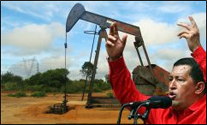 For many interested parties, upon hearing of the fresh consignment of US sanctions imposed on seven foreign firms (including Petróleos de Venezuela – PdVSA) for their supply of refined petroleum products to Iran, immediate thoughts would have gravitated toward two questions that have been well trodden since: will this halt Iran’s nuclear programme? And, will the sanctions hit PdVSA hard?
The short answer to both questions is a round-about no.
The slightly longer version reads that since Tehran has proved itself adept at circumventing weakly imposed sanctions up until now, it seems unlikely that slapping the wrists of these seven firms will buck that trend. And as for PdVSA, oil exports to the US will continue unaffected as will the activities of its subsidiaries, i.e. Citgo, meaning that business will likely continue as usual, save the newly enforced bans on US government contracts, import-export financing and US export licences — none of which have particularly interested the Venezuelan oil giant in the recent past anyway.
But this exhibition of relative (though still fairly puny) diplomatic muscle from Washington also kicks up a third and less widely touted question: is now the time to start calling Hugo Chávez’s oil bluff?
In recent years, the firebrand has threatened to diversify Venezuela’s oil away from the US market, principally toward China, in a bid to secure new security of supply; making Washington think twice before dishing out demands and creating a bit of wiggle room in the process. But upon closer inspection, Chávez’s aggressive oil diplomacy is perhaps not as well grounded as he might have us believe.
If truth be told, it is actually the US that is better placed to play hardball. Indeed, one of the most curious aspects of the Washington-Caracas standoff is that while both states undoubtedly depend on the other’s custom, it is in fact Caracas whose dependency is more acute. In 2010, 8.3% of US oil imports arrived from Venezuela — no small fry — but in marked contrast, this 8.3% translated to fully 43% of Venezuelan oil exports. It should be clear who stands to take the larger hit.
As for the Chinese alternative, for Beijing to take the Venezuelan market seriously, it would require an astronomical investment in order to bridge the logistical gap, not only in terms of transportation, but also in acquiring the capability to process Venezuela’s characteristically thick crude. And the latter point is a particularly important one since the fungible nature of oil as a commodity is called into question when consumers with the ability to process one’s commodity are in short supply. Couple that economic expense with the inevitable political one attached to any move into the US’ ‘backyard’, long since considered its strategic preserve, and a long term strategic partnership between Caracas and Beijing appears unlikely while the latter has better options in Central Asia.
Short of revenue-sapping, politically-charged, regional energy schemes such as Petrocaribe then, Venezuela really has little room for meaningful diversification away from the US.
Taking stock of this reality is important for US policy makers as it essentially means that a significant departure from the trade status quo between Caracas and Washington would be in the interests of neither party and is therefore unlikely as such. Quite frankly, it pours a bucket of cold water on Chávez’s fiery oil-threat since, with paltry means of pulling the plug on US supply the threat becomes little more than a bluff.
With that room for manoeuvre established, what of Washington’s scope for pressing Chávez harder on the ideological line?
Let’s be clear, slapping a reducer on Chávez will be best achieved democratically. The failed coup of 2002, hastily endorsed by the Bush administration, showed in no uncertain terms that attempts at regime change only serve to fan the flames that have kept Chávez’s popular appeal burning. Hence, the focus in Washington has correctly shifted to sanctions — the uncertain, yet politically safer middle-ground between austere words and boots on the ground.
There is, of course, a legitimate debate to be had on the utility of sanctions as a foreign policy tool in the first place. Indeed, if the proof of the pudding really is in the eating, then the new round of sanctions go some way to exposing the failures of the original Comprehensive Iran Sanctions, Accountability, and Divestment Act (CISADA). That said, the newly revised stipulations in relation to PdVSA may be more useful — as long as they are backed by a suitably aggressive approach moving forward — in a secondary capacity, by drawing the relationship between Venezuela and Iran back into the international spotlight and providing a new set of red lines against which Caracas can be judged.
Washington needs to maintain this momentum by pushing a harder line (something that has in the past been constrained by the weighty oil millstone) and calling Chávez’s bluff since taking a tougher stance could help to fragment Chávez’s power. To cut a long story short, by forcing the authoritarian to choose between the two driving thrusts of his foreign policy agenda — the economic pragmatism of oil, and his proclivity for anti-neoliberalism — Washington can place its foe in a position he’d really rather not be.
Should Caracas take the first option, the US will score an important victory in making a further pariah of Iran, not to mention denting Chávez’s international standing as an anti-Western revolutionary.
And if Chávez opts for the second and probably more likely course, the US would then be positioned to hamper his ability to plough-back into his political project through further and harsher sanctions. In such an environment, the inevitable failure of Chávez’s unsustainable socialist program would likely be accelerated, perhaps too late to affect his run for another term in 2012, but certainly enough dent his aspirations for perpetual power.
Formulating a strategy around this central goal — isolating Chávez’s foreign policy thrusts from one another — should thus be a priority for the current administration in an environment where it needn’t worry excessively about the backlash. Smashing Chávez’s finely tuned balance between the fight against the ostensible ills of neo-liberalism (his raison d’être in the eyes of a significant percentage of Venezuela’s electorate) and reaping the rewards of an oil trade that funds it, could be the diplomatic reducer that Washington seeks.
3
In Case You Missed It… Articles Roundup Week of 6/3/11
In this week’s roundup…The housing crisis is the top of mind issue for Venezuelans, as the country copes with soaring inflation and rising debt. Meanwhile, the oil sanctions debate rages on as President Hugo Chávez jokes about his government’s ties to Iran.
FACTBOX-Housing among top worries for Venezuelans, Reuters
Venezuela’s housing shortage is a challenge for President Hugo Chavez, a major concern for millions in the South American OPEC member, and one of the issues that could shape next year’s election. With 29 million people, Venezuela is short of 2 million housing units. Chavez blames past capitalist governments and local businesses for putting profit motives before the needs of society at large.
Chavez to Request $10.5 Billion in Debt Under New Venezuela Law, Bloomberg
Venezuelan President Hugo Chavez said he will send a request to the National Assembly today to issue up to 45 billion bolivars ($10.5 billion) in new bonds this year as part of a special debt law. Of the total, 20 billion bolivars would help pay for 153,000 homes as part of a housing drive, 10 billion bolivars would go to a new job creation program, 10 billion to cover public debt and 5 billion to respond to heavy rains that have damaged homes and infrastructure, Chavez said.
Venezuelans struggle to cope with soaring food prices, inflation tops Latin America, The Washington Post
Soaring food prices are forcing many Venezuelans to change their eating habits, trim their shopping lists and set aside more of their earnings to feed their families. The oil-exporting country is coping with one of the highest inflation rates in the world: 22.9 percent as of last month, and food prices are rising even faster. “It’s gotten 100 percent worse,” said Evelyn Villamizar, a 29-year-old student who is raising a 5-year-old son in a poor barrio of the Venezuelan capital, Caracas. She said she feels “strangled by the prices.”
Hugo Chavez in the U.S. Crosshairs, Foreign Policy
Finally, Hugo Chavez is being held accountable for his reckless efforts to aid and abet Iran’s illegal pursuit of a nuclear capability and evasion of international sanctions. This week, the Obama administration announced it was imposing sanctions on Venezuela’s state oil company PDVSA and the Venezuelan Military Industries Company CAVIM for their illicit dealings with Iran.
US Oil Sanctions Against Venezuela May End Up Helping Chavez, The Wall Street Journal
U.S. sanctions against Venezuela’s state oil company may benefit rather than hurt President Hugo Chavez’s government by providing fuel for anti-U.S. rhetoric as the leftist leader rallies supporters ahead of next year’s presidential elections. Slamming Washington is a timeworn strategy for winning votes in many parts of Latin America, and it could provide a boost to the re-election bid by Chavez, who in his 12 years in power has become the region’s loudest U.S. critic. “Chavez is using [the sanctions] as a weapon to consolidate his base, to put the opposition in an uncomfortable situation and to rally support for his election campaign,” said Anibal Romero, a Caracas-based retired professor of political science. While analysts don’t expect the recent sanctions to have much effect on Petroleos de Venezuela SA, or PdVSA, as the state oil company is known, the reaction from the Chavez government has generated unease among holders of Venezuelan debt, weighing on bonds trading in New York in recent days.
Chavez condemns US sanctions, jokes about missiles, Associated Press
President Hugo Chavez mocked U.S. concerns about Venezuela’s ties with Iran on Tuesday, joking that while his adversaries worry about Iranian-made missiles lining his country’s coast his government is actually erecting windmills there. The socialist leader at first said missiles could be launched at Washington and other U.S. cities, then held up a photograph of windmills along the South American country’s coast, saying “here they are.”
31
In Case You Missed It… Differing views on U.S.-imposed sanctions on Venezuela
Below are two differing views on the sanctions the U.S. recently imposed on Venezuela’s PDVSA.
US Oil Sanctions Against Venezuela May End Up Helping Chavez
The Wall Street Journal
By Ezequiel Minaya and Kejal Vyas
May 30, 2011
U.S. sanctions against Venezuela’s state oil company may benefit rather than hurt President Hugo Chavez’s government by providing fuel for anti-U.S. rhetoric as the leftist leader rallies supporters ahead of next year’s presidential elections. Slamming Washington is a timeworn strategy for winning votes in many parts of Latin America, and it could provide a boost to the re-election bid by Chavez, who in his 12 years in power has become the region’s loudest U.S. critic. “Chavez is using [the sanctions] as a weapon to consolidate his base, to put the opposition in an uncomfortable situation and to rally support for his election campaign,” said Anibal Romero, a Caracas-based retired professor of political science. While analysts don’t expect the recent sanctions to have much effect on Petroleos de Venezuela SA, or PdVSA, as the state oil company is known, the reaction from the Chavez government has generated unease among holders of Venezuelan debt, weighing on bonds trading in New York in recent days.
Hugo Chavez in the U.S. Crosshairs
Foreign Policy
By José R. Cárdenas
May 27, 2011
Finally, Hugo Chavez is being held accountable for his reckless efforts to aid and abet Iran’s illegal pursuit of a nuclear capability and evasion of international sanctions. This week, the Obama administration announced it was imposing sanctions on Venezuela’s state oil company PDVSA and the Venezuelan Military Industries Company CAVIM for their illicit dealings with Iran. The sanctions are admittedly minimal, but one hopes they signal a new vigor on the part of the administration towards further exposing and countering the nefarious Venezuelan-Iran axis.