


Archive for June, 2010
17
Marxism fails again, when it comes to economics
This is a great editorial piece posted at the Chattanooga Times Free Press in Florida. The author has a very compelling article about the current situation in Venezuela, Marxism and the 30% of inflation affecting a nation that should have overcome poverty and be a rich country by now…
It’s amazing — and troubling — that some countries believe they can achieve prosperity through Marxist policies that have been shown time and again to create poverty.
Down in South America, the nation of Venezuela has vast oil reserves. But instead of letting the free market guide the production of that oil, Marxist dictator Hugo Chavez exerts heavy government control, using oil proceeds to prop up his oppressive rule rather than permitting real, free-enterprise economic growth.
In consequence, Venezuela — which should be rich — has 30 percent inflation, the highest rate in all Latin America. Its economy has all but collapsed. There is a lack of some basic foods. And with all its oil supplies, it has major power shortages.
Yet Chavez is not backing down. He has been taking over one industry after another, and recently his government began seizing 18 distributors of food and retail goods. Many businesses seized in Venezuela have been accused of “hoarding” their goods, which is the pretext the government uses to take them over.
But it never seems to occur to Chavez to wonder why a company might not put its products on the market. The fact is, he has imposed price controls on many goods. In some cases, the controls are so strict that a company cannot recoup its production costs. So what reason would it have to put its wares up for sale? That would be a losing proposition.
17
Vacations in Venezuela? The opportunity of a lifetime!
This is a little bit of a different post from our regular editorial guidelines, but I think it is extremely thoughtful and provide a clear picture of the current situation in Venezuela where even tourism could be phased out. Venezuela was always seen as a paradisiacal destination, until now, where freedom and food are not longer available…
Venezuela was once a beautiful but generally laid-back and therefore often relaxing tourist destination. My wife and I spent well over a year there off and on between 1996 and 2001. We enjoyed it so much that we thought of settling there permanently, probably up in the Andes not far from the university city of Merida.
Although much of Venezuela’s beauty remains, many things are different. What follows will, I hope, be seen as an attempt at satire comprised of a mix of disgust, love, despair, and hope. Disgust and despair may have overwhelmed love and hope. The Venezuelan minister of tourism, Alejandro Fleming, is pushing Venezuela as an ideal vacation destination and he is right. Not only does scenic beauty abound, vacationing there would be instructive in many ways.
Fleming said the Ministry wants to give the industry a socialist twist, a claim that is not entirely new because it was the announced policy of his predecessor, Pedro “Fritz” Morejon, who has since and deservedly disappeared from the radar screen.
The State, the Minister reaffirmed, is running 11 hotels nationally and in June the Venetur chain of hotels, as they are known, will offer package tours after prices have been re-assessed and updated. The prices will be re-assessed and updated as soon as a new financial system is fully in place.
The new system aims to eliminate the wheeling and dealing of the national financial oligarchy in international alliance that include parallel dollars, irregularities in exchanges houses and money laundering, Chávez explained from Miraflores Palace to Venezolana de Television, where the Council of Ministers is meeting. …
We are revising the technical aspects of what will be announced shortly, he pointed out.
The government moves expeditiously and competently in such matters, so it’s not too early to make plans for a summer vacation.
For the many health conscious tourists, Venezuela can’t be beat; indeed, one could drop ten pounds or more due to the massive food shortages obviously caused by capitalist greed, food hoarding, incompetence of a few petty officials, speculation, and the bourgeois nature of some union members. President Chávez is as furious about the recent discovery of sixty thousand tons of rotting food stored in containers at the port of Puerto Cabello as President Obama is at the recent oil well disaster; like President Obama, he is on top of the situation.
“Debacles like this cannot be forgiven,” Chavez said during a televised speech. “Justice must come into play with a well-sharpened sword.”
“I’ve been informed that they detained one of those who must face up, the one responsible for bringing that food and having forgotten it there,” he added without elaborating.
Chavez’s comments came shortly after the Attorney General’s Office announced the arrest of Luis Enrique Pulido, the former president of Venezuela’s state-run food production and distribution company.
Coffee, a vile capitalist witches’ brew if ever there was one, was produced not long ago in great quantity and quality; it is now gone, which is clearly a reason for joy among those interested in healthy living. Although malaria was up 85% during the first quarter of 2010 compared with the first quarter of 2009, and dengue fever was up 138% percent, this was due to the drought last year; Venezuelan mosquitoes, unlike all others, thrive where it is dry and can’t survive in wet conditions.
In any event, the high level of medical care means this is not a cause for concern; it’s just great: prompt, efficient and compassionate. Violent crime may upset some (only in urban and rural areas), but it promotes running and other forms of worthwhile exercise. With a bit of luck, it can be even more exhilarating than other extreme but more expensive sports such as bungee jumping; Winston Churchill once said, “Nothing in life is so exhilarating as being shot at without effect.” And for those who enjoy vicarious military excitement, there is lots to be seen. On March 13, it was announced that:
Venezuelan President Hugo Chavez formally took delivery … of the first four K-8W airplanes out of 18 purchased in China for military training purposes, which, however, came armed with machine guns, air-to-ground missiles, bombs and rockets…
Venezuela’s purchases of military equipment from China follow its orders from Russia of 24 Sukoi-30 fighters, some 50 helicopters and 100,000 AK-103 automatic rifles in 2006 for some $3 million, according to Russian sources.
President Chávez will probably invite tourists to play with them since he enjoys doing so and is well known for sharing his simple pleasures with others.
Eco-tourism is very popular, and environmentalists will quickly find inspiration in the decline of Venezuela’s oil industry as well as discover new ways to conserve water and electricity, the supplies of which a thoughtful and ever compassionate government has wisely limited by allowing the infrastructure to deteriorate naturally in environmentally sound ways. President Chávez correctly “explained to us that we needed to take only three minutes showers, that we had no need for hot water and that he was creating a new ministry for electricity.”
Singing in the shower is out, but el Presidente is always thinking of innovative ways to help: earlier, he promised “to fly personally with Cuban scientists to ‘zap’ clouds and make them rain.” This alone would be a sufficient reason to visit Venezuela; where else can an immensely popular although very shy president be seen doing such things?
The steps being taken are wise and farsighted, and the funds which a more repressive government might have spent to maintain its own domestic infrastructure have instead been used to help other less progressive countries deal with their internal problems while advancing Bolivarian socialism at home. Chávez, bless him, is even trying to help Mexico revive as a tourist destination by funding and otherwise supporting the Ejercito Popular Revolucionario (EPR), a peace-loving bunch of guys whose aim is to destabilize the Mexican government and bring to Mexico the many Bolivarian joys now plentiful in Venezuela.
For the moment, however, Venezuela remains by far a better tourist destination than Mexico where, although possibly in its death throes, capitalism is not yet dead as el Presidente Chávez proudly proclaims it is in Venezuela. “We are going to bury Venezuelan capitalism,” Chavez said, adding that his administration would “take from the bourgeoisie control of the money which belongs to all Venezuelans.”
Entertainment is plentiful, but not the crass capitalist stuff so disgustingly common elsewhere. According to the Huffington Post, el Presidente Chávez has decreed its replacement with good socialist soap operas to inculcate proper values rather than capitalist avarice and vice.
El Presidente Chávez personally provides six hours or so of his own wisdom during Alo Presidente, which is broadcast throughout the entire country on Sundays (all other programming is preempted). He sometimes sings and recites poetry for all to enjoy. Not content with this great personal sacrifice, he also graces the airwaves with words of wisdom at odd hours of the day and night whenever he feels a need to do so. Even though Oliver Stone has encouraged him to be less self-sacrificing in these ways, he wisely ignores this well-meant advice. Despite the self-effacing nature for which he is widely revered, el Presidente Chávez has become Number 1 on the Venezuelan Twitter charts (formerly a tool of terror) and has launched a blog, a webpage and totes a BlackBerry to keep his followers up to date and informed on his daily activities. The Bolivarian Revolution has quickly gained its footing in the Internet battleground.
There is never a dull moment in Venezuela, with peaceful demonstrations presented by the happy proletariat and a few spoil-sport opposition jerks for tourists and others to watch daily; but don’t get involved or even too close, as that could be unpleasant.
For great fun and enlightenment, Venezuela should be at the top of everyone’s vacation list. It might be a once-in-a-lifetime opportunity, so now is the time to go.
16
Headlines for today June 16, 2010
So you are current with what is happening in Venezuela, here are some of the most relevant headlines about the Venezuelan situation
Limits on bond trading
Some business leaders criticised the monthly maximum of US$350,000 as insufficient, predicting it would worsen shortages of some imported products. Caracas business chamber leader Victor Maldonado said he expects the limit to exacerbate Venezuela’s recession.
Chavez Announces Takeover of Auto Parts Company
Hugo Chavez says his government will expropriate a small auto parts company and turn over its management to workers.
Guillermo Zuloaga leaves Venezuela
Associates of Guillermo Zuloaga confirmed Tuesday that he had left the country but didn’t say where he went. His flight means two of the company’s owners are out of the country.
Chavez Turns Up Heat on Globovision In Venezuela
The authorities would soon turn the Globovision logo red in honor of Chavez’s socialist revolution, with a red beret on top, the white-bearded Silva predicted, wearing an olive green shirt and military cap similar to those worn by the president.
16
Another bank expropriated by Chávez
 The Chávez regime is taking over another private bank. The bank’s owner condemned the takeover as political retribution against him and the critical TV station he helped found.
Banco Federal, the country’s eighth largest bank, is owned by Nelson Mezerhane, an opponent of President Hugo Chavez who is also a minority shareholder of Globovision, the country’s last TV channel that takes a stridently anti-government line.
On the bank´s website, an announcement says “that the bank has been expropriated, all the bank activities are put on hold, and the bank doors will stay closed.” The announcement is signed by “Junta Interventora.”
The government is temporarily shutting down Banco Federal, the country’s eighth-largest bank, due to its “serious financial situation,” said Humberto Ortega Diaz, the government’s state banking minister. Customers lined up outside some branches Monday aiming to withdraw money before the shutdown took effect. In the past seven months, the Chávez regime has seized control of about a dozen small banks.
15
Headlines for today June 15, 2010
So you are current with what is happening in Venezuela, here are some of the most relevant headlines about the Venezuelan situation:
Human rights commission expresses concerns in Venezuela
The Inter-American Commission on Human Rights on Monday castigated Venezuela for its recent record on freedom of expression in a letter sent to the country’s foreign minister.
OAS concerned about Chavez government attacks on Venezuela press
The commissioner for Venezuelan matters of the Inter-American Commission on Human Rights (IACHR) of the Organization of American States (OAS), Paulo Sergio Pinheiro, and the IACHR’s Special Rapporteur for Freedom of Expression, Catalina Botero Marino, today sent a communication to the Foreign Minister of the Bolivarian Republic of Venezuela, Nicolas Maduro Moros, to express their deep concern over the deterioration of the situation of the right to freedom of expression and to request information on incidents that have occurred in Venezuela over the last week.
US government worried about bench warrant against Guillermo Zuloaga
“This is the latest example of the Venezuelan government’s continued onslaught on freedom of expression,” Philip Crowley, the US Department of State spokesman, said.
15
The VeneCuba saga continues…

In a rare public critique, a former aide to Mr. Chávez has lambasted the role of Cuban advisers in delicate areas that he says include military intelligence, weapons training, strategic planning and the logistics of Mr. Chávez himself, who often travels on a Cuban plane.
“We are at the mercy of meddling in areas of national security by a Cuban regime, which wants Chávez to remain in power because Chávez gives them oil,” the former aide, Antonio Rivero, a brigadier general who retired this year, said in an interview.
“The Cuban advisers are there to exert pressure,” he added, “and they often claim to speak on the president’s behalf as if they were his emissaries.”
Mr. Chávez has made no bones about the presence of Cuban military advisers, who he says are “modestly” helping in some areas. But he has publicly offered no details on how many there are or where they are working.
Carlos A. Romero, a political scientist at the Central University of Venezuela who researches military ties with Cuba, estimates that there are 500 Cuban military advisers in the country, including an elite group of about 20 officers operating from Fuerte Tiuna, the country’s main garrison.
According to a New York Times article published this week, the critique by General Rivero, who worked as an aide to Mr. Chávez early in his presidency and later as the head of the emergency management agency, comes after years in which Cuba has served as a linchpin of support for Mr. Chávez
14
Venezuela’s state takeovers under Chavez
According to an article published on Friday by Reuters, Venezuela said on Friday a World Bank court had favored the OPEC member over Exxon Mobil Corp in a preliminary ruling for a case brought after President Hugo Chavez nationalized oil projects in 2007.
Following are key events in the president’s push to build a socialist state in South America’s biggest oil exporter, along with some of the cases brought against the OPEC member:
OIL:
* In 2007 the government took a majority stake in four heavy crude projects worth tens of billions of dollars in the vast Orinoco oil belt. U.S. majors Exxon Mobil Corp and ConocoPhillips (COP.N) quit the country over the move and filed arbitration claims against Venezuela with the World Bank’s International Center for Settlements of Investment Disputes, ICSID.
* France’s Total SA (TOTF.PA) and Norway’s StatoilHydro (STL.OL) received around $1 billion in compensation after reducing their holdings. BP Plc (BP.L) (BP.N) and Chevron Corp (CVX.N) remained as minority partners.
* Last year, Chavez seized a major gas injection project belonging to Williams Cos Inc (WMB.N) and a range of assets from local service companies.
FINANCE:
* Also in 2009, Chavez paid $1 billion for Banco de Venezuela, a division of Spanish bank Grupo Santander (SAN.MC), to help him channel state resources.
* His government has closed 11 small banks since November 2009 for operational irregularities. Some were reopened as state-run firms. Chavez has said he will nationalize any bank that fails to meet government lending guidelines or is in trouble.
HEAVY INDUSTRY:
* The government paid $2 billion in 2009 for Argentine-led Ternium SA’s (TX.N) stake in Venezuela’s largest steel mill.
* Chavez ordered the nationalization of the cement industry in 2008, affecting Mexico’s Cemex (CX.N), Switzerland’s Holcim (HOLN.VX) and France’s Lafarge SA (LAFP.PA). Holcim and Cemex both filed for arbitration with ICSID.
* Chavez has also considered bringing mining more firmly into state hands, and last November the mining ministry seized Gold Reserve Inc’s (GRZ.TO) (GRZ.A) Brisas project, which sits on one of Latin America’s largest gold veins. Gold Reserve immediately filed for arbitration with ICSID.
TELECOMMUNICATIONS:
* In 2007, Chavez nationalized the country’s largest telecommunications company, CANTV, buying out U.S.-based Verizon Communications Inc’s (VZ.N) 28.5 percent stake for $572 million. Analysts said Verizon’s compensation was fair.
POWER:
* In the same year, Venezuela expropriated U.S.-based AES Corp’s (AES.N) stake in Electricidad de Caracas, the country’s largest private power producer. It paid AES $740 million for its 82 percent stake. Analysts said the deal was fair for AES.
FARMING:
* In 2005, Chavez began implementing a 2001 law letting the state expropriate unproductive farms or seize land without proper titles. He has redistributed millions of acres deemed idle in a bid to boost food production and ease rural poverty — taking over some large farms, including ranch owned by Britain’s Vestey Group, who also filed for arbitration. The government agreed to pay more than $3 million to a group of Spanish farmers for their land.
Note from the Editor: The article was originally published by Reuters.
14
Bringing down Venezuela: News of the world on the effects of Chávez in the Venezuela economy
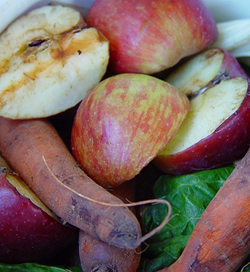
Credit: Google Images
Last week I blogged about some rotten food in Venezuela. In adiditon, last week we saw several news articles on the current shortage of basic staples in Venezuela, which currently imports 70 per cent of its food. Much of that is purchased by state corporations, using cheap foreign exchange and enjoying exemptions from tariffs and other charges. Two vast government chains, known as Mercal and Pdval, distribute subsidised food, but despite all of this – or perhaps because of it – their shelves are usually half-empty. So what is going on?
Part of the reason for the shortage is the discovery of thousands of shipping containers, loaded with decomposing food, stacked in ports and container depots. The food – more than 75,000 tonnes so far, according to press reports – was imported by Pdval last year, but never distributed. The former chairman of Pdval has been arrested.
Exactly what happened has yet to be pieced together. The government, which seems primarily interested in finding scapegoats, has shown little inclination to get to the bottom of the story. The charitable interpretation is incompetence bordering on criminal negligence. But there is evidence that importing vast quantities of food, regardless of its final destination, became a source of easy money for corrupt officials.
And on top of everything new economic reports published last week confirmed that Venezuela is the only country in Latin America with a constraining economy. What’s next?
14
Mack Condemns Hugo Chavez for Continuing to Shut Down Free Press in Venezuela
Continuing with our coverage on the lack of freedom of the press in Venezuela, this morning TMC News reported that Congressman Connie Mack from Florida, condemned Hugo Chavez for issuing an arrest warrant for Dr. Guillermo Zuloaga, the president of Globovision, and Dr. Zuloaga’s son, William Zuloaga Siso. Mack, who appered on CNN’s Larry King last week, to discuss the movie “South of the Border” from Oliver Stone, said that the US is a great nation ”because people like Oliver Stone have the right to say anything he wants, even if it is praising a communist and two-bit dictator. The people of Venezuela deserve the same rights of free speech and expression.”
Mack will participate in a panel discussion on the documentary and Hugo Chavez’s influence in the Western Hemisphere and press freedom in Latin America, to be held on June 16th at the House Subcommittee on the Western Hemisphere.
12
Guillermo Zuloaga of Globovisión ordered arrested in Venezuela
Venezuelan authorities issued an arrest warrant Friday for the owner of a television channel that takes a critical line against President Hugo Chávez.
Intelligence agents arrived at a home owned by Guillermo Zuloaga seeking to arrest him and one of his sons Friday night, but their whereabouts were unknown, defense lawyer Perla Jaimes said.
Zuloaga is president and majority shareholder of Globovision, the country’s only remaining channel on the airwaves that is stridently opposed to Chávez.
According to the Associated Press, a court issued the warrant for the businessman and his son, also named Guillermo, citing accusations of illegally keeping 24 new Toyota sport-utility vehicles stored at a home owned by Zuloaga, Attorney General Luisa Ortega said. Zuloaga and his son are charged with usury and conspiracy.
See the What will Chávez do next video, to view the chavista attacks on Globovisión.