


1
In Case You Missed It… Articles Roundup Week of 7/1/11
In this week’s round up… Venezuelan President Hugo Chavez breaks his silence, admitting he had surgery in Havana to remove a cancerous tumor; Chavez’s absence from Caracas raises questions about the future of the ruling party, PSUV, and his ability to continue to govern from abroad; Despite the President’s health crisis, the Chavez government continues its attacks against the free press, launching yet another questionable investigation against TV giant Globovision; and Venezuela has faltered in its fight against human trafficking.
Snap analysis: Chavez’s cancer surgery rocks Venezuela, Reuters
President Hugo Chavez’s announcement that he had surgery to remove a cancerous tumor has shaken up Venezuelan politics ahead of what was already looking like a tight race for the 2012 election. In an emotional speech from Cuba where he said he is recovering, the 56-year-old socialist did not give a timetable for his return to Venezuela and did not name a temporary leader. Here are some implications of his announcement:
Health Woes Cause Chávez to Postpone Key Summit, The Wall Street Journal
Venezuela postponed a regional summit to celebrate its 200th anniversary of independence, a move that is fueling widespread speculation that President Hugo Chávez is gravely ill. Mr. Chávez, holed up in a hospital in Cuba since June 10, was slated to host the two-day summit of Latin American and Caribbean leaders on the resort island of Margarita on July 5 and 6.
Venezuela To Probe Coverage Of Prison Riot By Local TV Network, The Wall Street Journal
Venezuelan authorities announced Thursday an investigation into the last major television station in the country openly critical of the government for allegedly attempting to fan civic unrest with what officials called misleading coverage of a prison riot. Globovision, which has been targeted by Venezuelan President Hugo Chavez in the past, faces a fine of 10% of gross revenue and could be taken off the air for up to 72 hours for its reports of the ongoing inmate uprising that officials say aimed to generate public unease and disorder.
Venezuela’s endeavors against human trafficking deemed insufficient, El Universal
US Secretary of State Hillary Rodham Clinton released the “2011 Trafficking in Persons Report.” A total of 184 countries, including the United States, were examined in the paper and it is concluded that as many as 27 million people might be living in slavery throughout the world.
29
Trafficking in Persons 2011 Report
The US State Department has included Venezuela on a list of nations that could face sanctions along with Cuba, Costa Rica, Panamá and the Dominican Republic for their lack of action in combating human trafficking. The 11th edition of the Trafficking in Persons Report did not see much progress in Venezuela’s efforts to combat human trafficking, for which it can face a number of sanctions ranging from the suspension of non humanitarian and non commercial aid to the US opposing IMF or World Bank financing.
According to the report presented by Secretary of State Hillary Clinton, “Venezuela is a source, transit, and destination country for men, women, and children subjected to sex trafficking and forced labor. Venezuelan women and girls are found in conditions of sex trafficking within the country, lured from poor interior regions to urban and tourist centers, such as Caracas, Maracaibo, and Margarita Island”.
The report also stated a number of reforms that must happen in order for Venezuela to get on the right track when it comes to combating human trafficking. These reforms include:
- Modifying its current laws in order to prohibit and adequately reprimand any type of human trafficking
- Intensifying its efforts to investigate and prosecute cases of forced prostitution and slave labor
- Prosecuting and jailing the traffickers
- Providing better specialized assistance to the victims
- Identifying the victims among vulnerable groups
- Improving the current databases in regards to these types of felonies
The listing of Venezuela in the report is likely to further deteriorate the already fragile diplomatic relations between both countries. Both countries lack the representation of ambassadors in their territories. Furthermore, the US imposed economic sanctions on the state owned oil company, PDVA, for their dealings with Iran.
24
Chávez Moves Forward with Expropriation of Argentina’s Matesi
Venezuelan President Hugo Chávez issued this week an Executive Decree authorizing the expropriation of Matesi, an Argentine steel company. As it is the case with other government expropriations in Venezuela, Matesi’s takeover has been a long and convoluted process which started in May of 2009, when the Chávez Administration first expressed an interest in nationalizing the company. In August 2009, the Ministry of Primary Industries and Mining took over the facility, seizing its equipment.
The Matesi plant is a subsidiary of Tenaris, a leading global supplier of steel tubes and related energy services, which is part of Argentina’s Techint conglomerate. While negotiating the terms of the transfer of assets, the company did not rule out taking legal action against Venezuela to seek prompt compensation for its entire interest in Matesi.
“While we reserve all our rights under international treaties and current laws in Venezuela, Tenaris is prepared to begin negotiations with the Venezuelan authorities to achieve the fair and adequate term and conditions for the transfer of Matesi to the Venezuelan government,” said the company.
The expropriation of Matesi coincided with the release of a new study that shows that companies expropriated by Chávez are unproductive, inefficient, and a bad deal for Venezuelan workers, especially as compared to their counterparts in the private sector.
22
Turn Out the Lights, the Party’s Over
 by Petardo de Petare
As soon as I heard of our government’s latest plan to ration electricity, I thought of the 1970s classic by American country music legend Willie Nelson. Yes, believe it or not, we too listen to Willie here in Venezuela, or at least I do anyways. The government’s latest rationing plan is proof positive that, when it comes to addressing our country’s power needs, the party’s over. The Chávez government has tacitly admitted that they have failed miserably in addressing the power needs of our country. The government’s incompetence in addressing any of the basic needs of our people has become more than a great inconvenience but a great disservice to Venezuelans, who on a daily basis face many challenges in achieving their dreams – from living in a safe neighborhood to having a remunerative job. To add insult to injury, the Chavistas do nothing but lay blame on others for their failures. When it comes to the power issue, they are now blaming us Venezuelans, chastising us for wasting too much energy. Energy Minister Alí Rodríguez Araque scolded us saying, “Demand is excessive.” Not to be left behind, Vice President Elías Jauá announced that “We need to take extraordinary measures to regulate the demand and stabilize the grid.” But, no one here in Petare is buying the government’s excuses.
It is worth asking how a country blessed with some of the largest oil reserves in the world is constantly subjected to power rationing and blackouts. Only under the leadership – or lack thereof – of the Chávez government can such travesty take place. First, the government blamed the Guri dam, the third largest hydroelectric power station in the world. The Guri supplies over 70% of the power consumed by Venezuelans. Last year, the Guri had very low water levels due to a severe drought. Tired of blaming Mother Nature, the government moved on to a more worthy enemy – private enterprise. On Phase II of their attacks, Chavistas accused large private businesses, such as shopping malls, of “wasting too much power.” As a result, the Sambil mall in Caracas was forced to close its doors early. Never mind two important economic indicators such as consumer spending and job creation. Who needs those? Phase III of the Chávez strategy was unabashedly political in nature. Our president and his posse accused the opposition of sabotaging our electricity for political gain – a perfect example of the pot calling the kettle black. Last but not least, in Phase IV, the blame has caught on to the rest of us – the Venezuelan people. According to the government, we are obsessed with “Yankee consumerism.”
They are running out of time and excuses. Today, the Guri is bursting with water, shopping malls are operating under a normal schedule, the opposition is gaining momentum and us, evil consumers, are going about our business as best as we can. And, the power outages continue. Why? Well, there are various reasons, all pointing to the government’s unwillingness to take serious steps to address this issue. For starters, our population has grown, and with it our energy needs. Despite that reality, the government has failed to make the power investments needed to keep up with the consumption growth in Venezuela. According to Gustavo Marcano, a member of our Chamber of Deputies, the government announced in 2005 the construction of 12 new power generation plants by 2008. Here we are, in 2011, and all remain unfinished.
Another important point to consider in the electricity crisis is the subsidies provided by the government. Experts argue that these subsidies actually backfire by encouraging increased consumption. Lastly, the specter of expropriation is also a factor in this crisis. In 2007, the government expropriated Electricidad de Caracas, owned by a U.S. company, AES. As everything else that falls into this government’s hands, the new CORPOELEC is a mismanaged and inefficient enterprise, which has been unable to make the necessary investments in the power transmission lines, for example, needed to transfer the power from the Guri to my home so that I can keep my lights on.
But what really makes us red with anger here in Petare is the fact that, while we are inconvenienced with power outages, our government, in its eternal need to seek approval abroad, is spending millions of bolívares in other countries to provide them power. In Nicaragua, Mr. Chávez spent $52 million to build the Nagarote power plant, and in Bolivia, $72 million were allocated for the Entre Rios thermoelectric plant. Last but not least, to please Mr. Chávez’s hero, Fidel Castro, our government spent $170 million to build a power plant in Holguín. It makes absolutely no sense!
By themselves, the power outages are a problem the government could very well overcome – at least, politically speaking. But when one combines the outages with the myriad of other major problems facing Venezuelans every day, it becomes increasingly harder to “spin” the government’s incompetence. In other words, the power crisis is not an isolated incident; it is a real life example of the government’s inability to manage any of the most basic needs of the Venezuelan people. That is why I believe that for this government, the party may soon be over. Sing it, Willie!
17
In Case You Missed It… Articles Roundup Week of 6/17/11
In this week’s roundup…the Venezuelan President’s stint in Cuba stirs up questions and conflict back home regarding the constitutionality of enacting laws and governing Venezuela while abroad for an extended period of time. Meanwhile, the ministers of the Chávez government begin to institute electricity rationing across the country as a way to address the power outages across the country. Over consumption of energy is but the latest justification by the government for the power outages after previously blaming droughts, business consumption and sabotage by opposition activists.
Post-op Chavez runs government from Cuba, Reuters via Toronto Sun
Venezuelan President Hugo Chavez said he has his “full faculties” after surgery in Cuba and was still managing government affairs despite being ordered to rest for several more days. Chávez, 56, had a pelvic abscess successfully removed on Friday during a scheduled visit to Cuba, forcing him to postpone his return to Venezuela.
Venezuelan Congress Blocks Temporary Hand-Off Of Chavez’s Duties¸ Dow Jones Newswire
Supporters of Venezuelan President Hugo Chávez rejected a proposal late Tuesday in the national congress that called for a temporary hand-off of presidential duties during the leader’s recovery in Cuba from unplanned surgery.
Chavez’s medical absence in Cuba angers opposition, Reuters via The Gazette
President Hugo Chávez’s continued absence in Cuba after surgery has laid bare his one-man dominance of Venezuelan politics and infuriated opponents hoping to dethrone him in next year’s vote.
Lawmaker to file a complaint against Chávez and his ministers, El Universal
According to opposition deputy Alfonso Marquina (Un Nuevo Tiempo, UNT, state of Miranda), President Hugo Chávez and his Cabinet violated the Constitution and Venezuelan laws after because they enacted the Special Debt Law while Chavez was outside Venezuela and without convening a Council of Ministers.
Venezuela to Restrict Electricity Use for Second Straight Year on Blackout, Bloomberg
Venezuela, the largest oil producer in South America, will announce measures to curb electricity consumption for a second-consecutive year, prompted by a blackout in the country’s most-populous state, Zulia.
Venezuela Charges State Electricity Co Worker With Sabotage, The Wall Street Journal
Venezuelan authorities Tuesday charged an employee of state-run electricity company Corpoelec with sabotage, saying the act led to a major electricity failure across several states in May. In a statement, the attorney general’s office said it charged Luis Alfonzo Pena Nañez for his role in the power outage. The ministry also said it would charge another worker, Hugo Alberto Aguilar Caceres, on Friday. Under state law, the accused could face four to eight years in prison.
17
Venezuela Government Ranked “Least Accountable Government in the World”
A new report released this week concludes that Venezuela is “the worst performer in the world in accountability and effective checks on the executive power.” The 2011 Rule of Law Index, which surveyed 200 experts from 66 countries, also found that Venezuela is one of the countries that least respect fundamental human rights, including freedoms of opinion and expression and the right to privacy. In addition, the Index states that the Venezuelan government offers very weak protections of property rights. In terms of crime prevention, the report says that often Venezuela does not prosecute or convict perpetrators of burglaries. Security is one of the top-of-mind concerns for most Venezuelans, who increasingly find themselves victims of crime.
Out of 66 countries studied, Venezuela ranked:
• 54th in corruption
• 64th in crime and violence
• Dead last (66th) in transparency of government institutions and strength of the criminal justice system, which is often influenced by politics
Among the 12 countries surveyed in Latin America, Venezuela received the lowest scores in the region, ranking either last or second to last in six of the variables.
The Rule of Law Index was developed by the World Justice Project – an organization partly funded by the Bill and Melinda Gates Foundation. The Index regularly reviews countries’ compliance with the rule of law and access to independent justice in the world. The full report can be found at: www.worldjusticeproject.org.
10
In Case You Missed It… Articles Roundup Week of 6/10/11
In this week’s roundup…Venezuelan opposition leaders react to President Hugo Chávez’s successful bid in raising the national debt limit, more fallout from the U.S.-imposed sanctions on PDVSA, opposition candidates get momentum, and the housing crisis continues to be top of mind for Venezuelans.
Venezuelan lawmakers authorize $22.5B in new debt, Associated Press
President Hugo Chavez won approval from legislators Thursday to increase the amount of new debt Venezuela’s government can take on this year to more than $22.5 billion. In December, lawmakers had authorized the equivalent of $12 billion in new debt this year. But Chavez last week requested that the limit be raised about 86 percent. Opposition lawmakers criticized the change, expressing concerns about the government’s growing debt. They said the boost was unjustified at a time when the OPEC member is enjoying higher prices for its oil.
Venezuela’s foreign minister says relations with Washington are ‘frozen’ following sanctions , The Washington Post
Venezuela’s relations with the U.S. are frozen and President Hugo Chavez’s government sees no possibility of improving them after its state oil company was hit with sanctions by Washington, the country’s top diplomat said Sunday.
The US Has Lost Sight Of Its National Interest In Venezuela, Business Insider
According to the U.S. Energy Administration, two months ago the United States total crude oil imports averaged 9,033 thousand barrels per day (tbpd), with the top five exporting countries being Canada (2,666 tbpd), Mexico (1,319 tbpd), Saudi Arabia (1,107 tbpd), Venezuela (930 tbpd) and Nigeria (918 tbpd.) Notice anything odd about this list?
Chávez Foe Sees Imitation as Best Path, Bloomberg
Henrique Capriles Radonski, whose family members own Venezuela’s biggest movie theater chain, is emerging as President Hugo Chavez’s strongest rival in 2012 elections by copying his favorite ploy of lavishing public money on the poor.
Venezuela’s Chávez says OPEC need not pump more oil, Reuters Africa
Venezuela’s President Hugo Chavez on Tuesday said current demand for oil does not justify an OPEC production hike, adding the market was well-supplied. The oil exporters group meets on Wednesday and Gulf Arab members are pushing for an output increase of at least 1.4 million barrels per day.
FACTBOX-Housing among top worries for Venezuelans, Reuters
Venezuela’s housing shortage is a challenge for President Hugo Chavez, a major concern for millions in the South American OPEC member, and one of the issues that could shape next year’s election. With 29 million people, Venezuela is short of 2 million housing units.
9
Time to call Chávez’s oil bluff?

WNVZ is pleased to introduce blogger Dane Vallejo as a guest writer to our website. An Associate Fellow at The Henry Jackson Society, Dane blogs regularly on Latin American issues. ¡Bienvenido Dane!
Washington has for some time been constricted in taking a tough stance against Venezuela’s Chávez by the threat it perceives to its security of oil supply. But what if that threat was little more than a bluff?
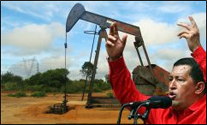 For many interested parties, upon hearing of the fresh consignment of US sanctions imposed on seven foreign firms (including Petróleos de Venezuela – PdVSA) for their supply of refined petroleum products to Iran, immediate thoughts would have gravitated toward two questions that have been well trodden since: will this halt Iran’s nuclear programme? And, will the sanctions hit PdVSA hard?
The short answer to both questions is a round-about no.
The slightly longer version reads that since Tehran has proved itself adept at circumventing weakly imposed sanctions up until now, it seems unlikely that slapping the wrists of these seven firms will buck that trend. And as for PdVSA, oil exports to the US will continue unaffected as will the activities of its subsidiaries, i.e. Citgo, meaning that business will likely continue as usual, save the newly enforced bans on US government contracts, import-export financing and US export licences — none of which have particularly interested the Venezuelan oil giant in the recent past anyway.
But this exhibition of relative (though still fairly puny) diplomatic muscle from Washington also kicks up a third and less widely touted question: is now the time to start calling Hugo Chávez’s oil bluff?
In recent years, the firebrand has threatened to diversify Venezuela’s oil away from the US market, principally toward China, in a bid to secure new security of supply; making Washington think twice before dishing out demands and creating a bit of wiggle room in the process. But upon closer inspection, Chávez’s aggressive oil diplomacy is perhaps not as well grounded as he might have us believe.
If truth be told, it is actually the US that is better placed to play hardball. Indeed, one of the most curious aspects of the Washington-Caracas standoff is that while both states undoubtedly depend on the other’s custom, it is in fact Caracas whose dependency is more acute. In 2010, 8.3% of US oil imports arrived from Venezuela — no small fry — but in marked contrast, this 8.3% translated to fully 43% of Venezuelan oil exports. It should be clear who stands to take the larger hit.
As for the Chinese alternative, for Beijing to take the Venezuelan market seriously, it would require an astronomical investment in order to bridge the logistical gap, not only in terms of transportation, but also in acquiring the capability to process Venezuela’s characteristically thick crude. And the latter point is a particularly important one since the fungible nature of oil as a commodity is called into question when consumers with the ability to process one’s commodity are in short supply. Couple that economic expense with the inevitable political one attached to any move into the US’ ‘backyard’, long since considered its strategic preserve, and a long term strategic partnership between Caracas and Beijing appears unlikely while the latter has better options in Central Asia.
Short of revenue-sapping, politically-charged, regional energy schemes such as Petrocaribe then, Venezuela really has little room for meaningful diversification away from the US.
Taking stock of this reality is important for US policy makers as it essentially means that a significant departure from the trade status quo between Caracas and Washington would be in the interests of neither party and is therefore unlikely as such. Quite frankly, it pours a bucket of cold water on Chávez’s fiery oil-threat since, with paltry means of pulling the plug on US supply the threat becomes little more than a bluff.
With that room for manoeuvre established, what of Washington’s scope for pressing Chávez harder on the ideological line?
Let’s be clear, slapping a reducer on Chávez will be best achieved democratically. The failed coup of 2002, hastily endorsed by the Bush administration, showed in no uncertain terms that attempts at regime change only serve to fan the flames that have kept Chávez’s popular appeal burning. Hence, the focus in Washington has correctly shifted to sanctions — the uncertain, yet politically safer middle-ground between austere words and boots on the ground.
There is, of course, a legitimate debate to be had on the utility of sanctions as a foreign policy tool in the first place. Indeed, if the proof of the pudding really is in the eating, then the new round of sanctions go some way to exposing the failures of the original Comprehensive Iran Sanctions, Accountability, and Divestment Act (CISADA). That said, the newly revised stipulations in relation to PdVSA may be more useful — as long as they are backed by a suitably aggressive approach moving forward — in a secondary capacity, by drawing the relationship between Venezuela and Iran back into the international spotlight and providing a new set of red lines against which Caracas can be judged.
Washington needs to maintain this momentum by pushing a harder line (something that has in the past been constrained by the weighty oil millstone) and calling Chávez’s bluff since taking a tougher stance could help to fragment Chávez’s power. To cut a long story short, by forcing the authoritarian to choose between the two driving thrusts of his foreign policy agenda — the economic pragmatism of oil, and his proclivity for anti-neoliberalism — Washington can place its foe in a position he’d really rather not be.
Should Caracas take the first option, the US will score an important victory in making a further pariah of Iran, not to mention denting Chávez’s international standing as an anti-Western revolutionary.
And if Chávez opts for the second and probably more likely course, the US would then be positioned to hamper his ability to plough-back into his political project through further and harsher sanctions. In such an environment, the inevitable failure of Chávez’s unsustainable socialist program would likely be accelerated, perhaps too late to affect his run for another term in 2012, but certainly enough dent his aspirations for perpetual power.
Formulating a strategy around this central goal — isolating Chávez’s foreign policy thrusts from one another — should thus be a priority for the current administration in an environment where it needn’t worry excessively about the backlash. Smashing Chávez’s finely tuned balance between the fight against the ostensible ills of neo-liberalism (his raison d’être in the eyes of a significant percentage of Venezuela’s electorate) and reaping the rewards of an oil trade that funds it, could be the diplomatic reducer that Washington seeks.
6
Caught Between Washington and a Hard Place
WNVZ is proud to introduce the newest blogger to join our ranks – el Petardo de Petare. Petardo will offer his viewpoint on Venezuelan political and social issues with his characteristic wit and insightful analysis. In the first installment of his blog, Petardo takes on the recent sanctions imposed by the United States against PDVSA and the political circus that followed.
Since the United States announced sanctions against our state oil company, PDVSA, Venezuelans have been enduring a daily dose of government-sponsored marches condemning the U.S. measure. PDVSA workers around the country have been forcefully mobilized – dressed from head to toe in their finest red clothing – to rally against the “Yankees.” Mr. Chávez’s own party, PSUV, recently held a rally to protest the U.S. sanctions. Hoards of state-organized mobs have proclaimed their repudiation of the “Yankee imperialists,” accusing them of threatening our sovereignty. As if synchronized – and it is – the government-run media has devoted a majority of its news coverage to the issue. Not a moment goes by without some or other government official loudly proclaiming their defense of our national sovereignty and making wild accusations against the United States. PSUV National Assemblyman, Aristóbulo Isturiz went as far as accusing the United States of attempting to sabotage next year’s presidential elections. Another Chávez lackey suggested the final goal of the United States is to invade Venezuela. You get the drift.
All this huffing and puffing is much to do about nothing. The sanctions will have little to no impact on Venezuela. After all, CITGO, our Bolivarian mole in the United States, is not impacted by the move. Thus, Venezuela will continue to be able to export more than 40% of our oil production to what the regime calls “capitalist, imperialist robber barons to our north.” Even with all its chest pounding, the Chávez government did not dare touch its oil exports to America. The reason is simple. The United States is the leading buyer of our golden goose – oil – which provides for most of our foreign currency reserves. For a government whose only economic policy is to spend money buying new voters, the U.S. money spigot is the most important revenue source and, therefore, all that really matters to them.
The most interesting sideshow to this situation is the unusual parallel between the government’s reaction and that of the opposition political parties and leaders. For the first time in the millennia, Washington accomplished something not very often seen in Venezuela. That is the government and opposition agreeing on something. Both have condemned the U.S. sanctions.
For the Venezuelan opposition, the decision to condemn the sanctions was not easy. In doing so, they found themselves caught between Washington and a hard place. Not so for the government. The default stance of Chavistas is to blame the United States for virtually everything that is wrong in our country – never mind that our hardships are really a direct result of the government’s utter incompetence. In rejecting the U.S. sanctions, the opposition risked alienating its most ardent supporters. You see, among the opposition hardliners, any agreement with the government is considered a cardinal sin. For the hardliners, opposing Chavismo means disagreeing with anything and everything President Chávez does. If you dare agree on anything, no matter how large or small the scale of the issue, you are automatically branded “too soft.” At the same time, had the opposition expressed even the most timid support for the U.S. sanctions, the Chávez government would have attacked them as “servants of the American imperialists,” and willing partners in “selling out” Venezuela’s independence and sovereignty.
The opposition’s decision to reject the sanctions was honest, brave, and smart. Otherwise, they would have handed Mr. Chávez, in a silver platter, a fantastic excuse to shift the political debate in our country from what really matters – inflation, food shortages, blackouts, etc. – to useless, anti-American rhetoric. It would have strengthened Mr. Chávez’s ability to portray himself as the only political leader capable of standing up for our country. At a time when the government is more vulnerable than ever with the headlines being dominated by the most recent blackouts and economic morass, disagreement would have handed Chavistas a winning card. Clearly, the opposition is willing to alienate a small but vociferous minority rather than jeopardize its credibility with the middle-of-the-road majority voters, who hold in their hands the future of Venezuela.
The sanctions issue also highlights how Caracas and Washington are on completely different wavelengths when it comes to the issues that really matter. Every time I read the U.S. media, I see that when discussing Venezuela, U.S. opinion leaders only care about Mr. Chávez’s links to Iran and other “undesirables.” But here, in Petare, that is hardly a concern or topic of discussion. At a time when Venezuelans are forced to fight every day to find sugar, coffee, and meat, or to hold on to their jobs, or to protect themselves from becoming a victim of crime, Mr. Chávez’s extracurricular activities in the world stage are not a domestic priority. That’s not to say that the government’s foreign policy should not be scrutinized, but rather that Venezuela’s foreign policy should be judged based on what is in our national interest and not that of any other country, including the United States.
3
In Case You Missed It… Articles Roundup Week of 6/3/11
In this week’s roundup…The housing crisis is the top of mind issue for Venezuelans, as the country copes with soaring inflation and rising debt. Meanwhile, the oil sanctions debate rages on as President Hugo Chávez jokes about his government’s ties to Iran.
FACTBOX-Housing among top worries for Venezuelans, Reuters
Venezuela’s housing shortage is a challenge for President Hugo Chavez, a major concern for millions in the South American OPEC member, and one of the issues that could shape next year’s election. With 29 million people, Venezuela is short of 2 million housing units. Chavez blames past capitalist governments and local businesses for putting profit motives before the needs of society at large.
Chavez to Request $10.5 Billion in Debt Under New Venezuela Law, Bloomberg
Venezuelan President Hugo Chavez said he will send a request to the National Assembly today to issue up to 45 billion bolivars ($10.5 billion) in new bonds this year as part of a special debt law. Of the total, 20 billion bolivars would help pay for 153,000 homes as part of a housing drive, 10 billion bolivars would go to a new job creation program, 10 billion to cover public debt and 5 billion to respond to heavy rains that have damaged homes and infrastructure, Chavez said.
Venezuelans struggle to cope with soaring food prices, inflation tops Latin America, The Washington Post
Soaring food prices are forcing many Venezuelans to change their eating habits, trim their shopping lists and set aside more of their earnings to feed their families. The oil-exporting country is coping with one of the highest inflation rates in the world: 22.9 percent as of last month, and food prices are rising even faster. “It’s gotten 100 percent worse,” said Evelyn Villamizar, a 29-year-old student who is raising a 5-year-old son in a poor barrio of the Venezuelan capital, Caracas. She said she feels “strangled by the prices.”
Hugo Chavez in the U.S. Crosshairs, Foreign Policy
Finally, Hugo Chavez is being held accountable for his reckless efforts to aid and abet Iran’s illegal pursuit of a nuclear capability and evasion of international sanctions. This week, the Obama administration announced it was imposing sanctions on Venezuela’s state oil company PDVSA and the Venezuelan Military Industries Company CAVIM for their illicit dealings with Iran.
US Oil Sanctions Against Venezuela May End Up Helping Chavez, The Wall Street Journal
U.S. sanctions against Venezuela’s state oil company may benefit rather than hurt President Hugo Chavez’s government by providing fuel for anti-U.S. rhetoric as the leftist leader rallies supporters ahead of next year’s presidential elections. Slamming Washington is a timeworn strategy for winning votes in many parts of Latin America, and it could provide a boost to the re-election bid by Chavez, who in his 12 years in power has become the region’s loudest U.S. critic. “Chavez is using [the sanctions] as a weapon to consolidate his base, to put the opposition in an uncomfortable situation and to rally support for his election campaign,” said Anibal Romero, a Caracas-based retired professor of political science. While analysts don’t expect the recent sanctions to have much effect on Petroleos de Venezuela SA, or PdVSA, as the state oil company is known, the reaction from the Chavez government has generated unease among holders of Venezuelan debt, weighing on bonds trading in New York in recent days.
Chavez condemns US sanctions, jokes about missiles, Associated Press
President Hugo Chavez mocked U.S. concerns about Venezuela’s ties with Iran on Tuesday, joking that while his adversaries worry about Iranian-made missiles lining his country’s coast his government is actually erecting windmills there. The socialist leader at first said missiles could be launched at Washington and other U.S. cities, then held up a photograph of windmills along the South American country’s coast, saying “here they are.”